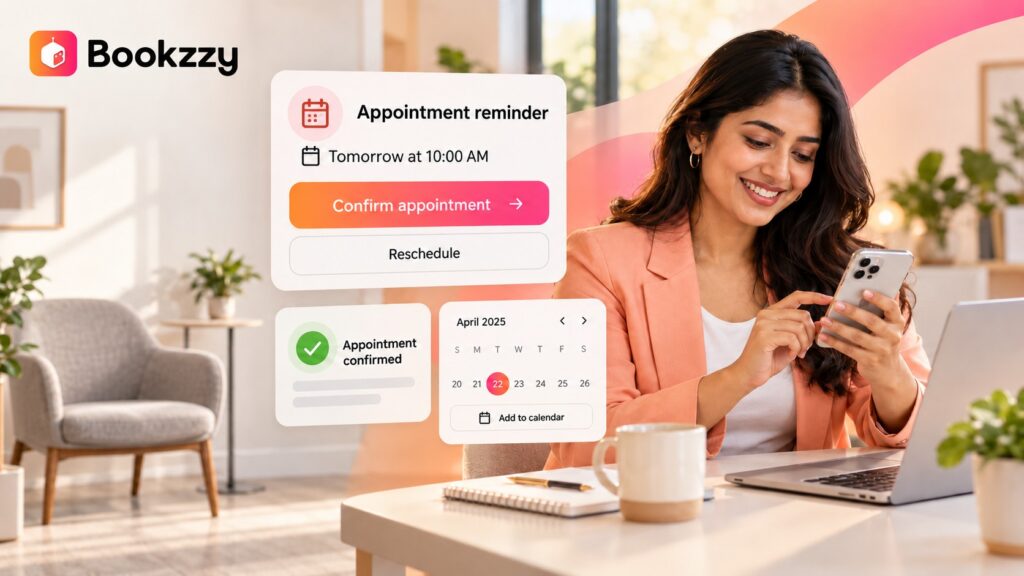
How to Reduce No-Show Appointments: 7 Proven Methods That Actually Work
In This Document
Never keep a lead waiting. Try AI ChatIQ.
It is Saturday morning, your calendar is full, your team is ready, and one of the best slots of the day has been reserved for a customer who never arrives.
There is no cancellation, no message, and no warning that would have given you enough time to offer the appointment to somebody else. The slot simply disappears from the day, while the staff member who was supposed to handle the appointment is left waiting.
For businesses that depend on scheduled appointments, this is more than an inconvenience. A missed booking can mean lost revenue, unused staff capacity, a disrupted schedule, and marketing spend that generated a customer who never actually completed the appointment.
The problem is also more common than many website owners realise. The research referenced in this article’s planning brief found an average no-show rate of approximately 23% across 105 published studies, although the actual rate will naturally vary significantly between industries, businesses, appointment types, and customer groups.
The most effective way to reduce no-show appointments is to combine clear booking communication, timely reminders, easy confirmation and rescheduling, deposits where appropriate, transparent policies, personal follow-up, and regular tracking of your no-show patterns. There is rarely one single fix, because customers miss appointments for several different reasons.
If your website is responsible for generating appointments, the experience between “I want to book” and “I actually turned up” deserves as much attention as the process that generated the lead in the first place.
What Is a No-Show Appointment?
A no-show appointment is a scheduled booking that the customer does not attend and does not cancel in advance.
It is slightly different from a late cancellation.
A customer who cancels a few hours before an appointment may still cause disruption, but depending on your business and demand, you may have an opportunity to offer the slot to somebody else.
With a true no-show, that opportunity usually disappears because the business only discovers the problem when the appointment should already have started.
This distinction matters because businesses often group cancellations and no-shows together when analysing their booking performance. They are related problems, but they can require different solutions.
For example, improving your cancellation and rescheduling experience may reduce both late cancellations and no-shows, while a reminder system primarily helps customers who simply forgot about the booking.
Be the First to Respond, Every Time
Bookzzy AI ChatIQ answers questions and qualifies leads instantly, so no enquiry goes cold while your team is busy
How to Calculate Your Appointment No-Show Rate
You do not need complicated analytics to calculate your appointment no-show rate.
Use this formula:
Appointment no-show rate = (Missed appointments ÷ Total booked appointments) × 100
For example, imagine your business recorded:
- 200 booked appointments during the month
- 20 customers who did not attend and did not cancel
Your calculation would be:
20 ÷ 200 × 100 = 10%
Your appointment no-show rate for that month would therefore be 10%.
The most useful comparison is often not against a generic industry benchmark, because there may not be a reliable benchmark for your exact business type. Instead, measure your current baseline and look at whether your rate improves after you change your booking process.
What Do No-Shows Actually Cost Your Business?
The most obvious cost of a missed appointment is the value of the booking itself, but the real effect can be wider.
A no-show may leave an employee with nothing productive to do during a reserved period. It may prevent another customer from accessing a slot they wanted. It may also mean that money spent on advertising, SEO, social media, referral campaigns, or lead generation never produces the appointment revenue you expected.
Rather than relying on a dramatic industry statistic that may not apply to your business, calculate the potential impact using your own average appointment value.
Here is a simple example.
| Average Booking Value | No-Shows Per Week | Estimated Weekly Loss | Estimated Annual Loss* |
|---|---|---|---|
| $50 | 5 | $250 | $13,000 |
| $120 | 5 | $600 | $31,200 |
| $250 | 5 | $1,250 | $65,000 |
*Based on 52 weeks per year.
Annual examples use 52 weeks and assume the appointment value would otherwise have been realised. They are simple illustrations rather than guaranteed revenue outcomes.
The numbers become more important when acquisition costs are involved.
You may have paid for Google Ads, invested in organic search, built landing pages, created content, answered an enquiry, and converted the visitor into an appointment. If that person does not attend and the slot cannot be filled, a large part of that acquisition effort produces no immediate return.
That is why reducing appointment no-shows should not be treated only as an operational issue.
For many website owners, it is also a conversion and customer journey issue.
Want to turn more website visitors into properly captured enquiries and bookings? Start a free Bookzzy trial and build a smoother path from website visit to customer action.
Why Automated Appointment Reminders Reduce No-Shows
Automated appointment reminders can reduce no-shows because one of the simplest reasons people miss appointments is that they forget.
Someone might book a salon appointment two weeks in advance, arrange a consultation while they are at work, schedule a service visit late at night, or make a booking while managing several other commitments.
By the time the appointment arrives, the original booking may no longer be at the front of their mind.
The research summarised in the source brief provides useful evidence for this effect. A Cochrane review cited there found that text reminders reduced missed appointments by approximately 29% to 39% compared with no reminder. The brief also references a study involving 9,835 patients in which automated reminders reduced missed appointments from 23.1% to 17.3%.
However, reminders should not be treated as a complete no-show solution.
A person may remember the appointment perfectly well and still miss it because their plans changed, they could not work out how to reschedule, the booking no longer feels important, they have concerns about the cost, or the cancellation process involves too much effort.
This is why reducing appointment no-shows usually requires several small improvements across the complete booking journey rather than relying on one notification.
7 Proven Methods to Reduce No-Show Appointments
The seven methods below address different reasons customers fail to attend, from simple forgetfulness to poor cancellation experiences and unclear booking expectations.
1. Send Appointment Reminders Before the Booking
Appointment reminders are one of the most established methods for reducing forgotten bookings.
Depending on your system and customer preferences, reminders can be delivered by SMS, email, messaging applications, or another channel that the customer has agreed to receive communications through.
A practical reminder sequence might include a message around 48 hours before the appointment and another closer to the booking.
The exact timing should depend on the type of service you offer.
A two-hour reminder may be useful for a local appointment, while a longer reminder window may be more appropriate when customers need time to rearrange work, transport, childcare, or other commitments.
The important point is consistency.
If your business uses reminders, they should be part of a dependable process rather than something employees have to remember to send manually every day.
Pro tip: Keep appointment reminders useful and concise. Include the date, time, essential location information, and a clear method for changing the booking if the customer can no longer attend.
2. Ask Customers to Confirm Their Appointment
A reminder tells the customer that the appointment exists.
A confirmation asks them to make a small decision.
That difference can be valuable.
When someone actively confirms a booking, they have engaged with the appointment again rather than passively seeing a notification and moving on.
Confirmation can also give the business useful information.
If a customer has not confirmed a high-value appointment close to the scheduled time, the team may choose to contact them, depending on its processes and available resources.
This does not mean every unconfirmed appointment will become a no-show, and businesses should avoid treating it that way. Confirmation simply creates another useful point of interaction between the booking and the appointment itself.
Pro tip: Make confirmation as easy as possible. Customers are far more likely to respond when confirmation takes one click rather than several steps.
3. Make Cancelling or Rescheduling Easy
Some customers become no-shows because cancelling feels inconvenient.
If changing an appointment requires finding a phone number, calling during business hours, sitting on hold, explaining the situation, and waiting for somebody to manually find another time, customers may decide to deal with it later.
Then later becomes never.
A smoother rescheduling process can help your business discover unavailable customers earlier, which gives you more time to offer the appointment to somebody else.
Your booking experience should therefore make it obvious what customers should do when their plans change.
If your booking technology supports self-service rescheduling, consider giving customers a clear route to use it.
If rescheduling requires contacting your team, make that process simple and visible rather than hiding the information deep within your website.
The objective is not to encourage cancellations.
It is to turn customers who cannot attend into customers who tell you early enough to do something about it.
Pro tip: Review your cancellation journey from a customer’s perspective. If you would find it annoying to change the appointment yourself, your customers probably will too.
4. Consider Deposits for High-Value Appointments
Deposits can make sense for businesses where appointments consume significant staff time, specialist resources, or limited availability.
A hair colour appointment lasting several hours creates a different level of financial exposure from a short introductory call. A specialist consultation may also justify a different booking policy from a quick service appointment.
For those types of bookings, a small deposit can increase commitment while providing some protection against last-minute changes.
However, deposits need to be used carefully.
Requiring money too early can also introduce friction into the booking process and may reduce the number of customers who complete their booking.
The right approach depends on your business model, average booking value, demand, and customer expectations.
If you introduce deposits, explain the terms before the customer pays, including what happens if they reschedule, cancel with sufficient notice, or fail to attend.
Pro tip: Start with appointments where a no-show has the greatest operational impact instead of immediately adding a deposit requirement to every booking.
5. Create a Clear No-Show and Cancellation Policy
Customers cannot reasonably follow a policy they never saw.
Your no-show and cancellation terms should therefore appear clearly during the booking process rather than being buried inside a long terms page that almost nobody reads.
A good policy explains:
- How much notice you would like for cancellations
- How customers should cancel or reschedule
- Whether deposits are refundable
- Whether repeated no-shows affect future bookings
- Any fees that may apply
Keep the language simple.
The purpose of the policy is not to intimidate customers. It is to make expectations clear before the appointment takes place.
For businesses operating in regulated industries or jurisdictions with specific consumer requirements, the policy should also be reviewed for compliance with applicable laws and regulations.
Pro tip: Display the policy before the customer completes the booking and include a link to it in the booking confirmation.
6. Follow Up After a Missed Appointment
A missed appointment does not necessarily mean the customer has disappeared forever.
Sometimes they forgot. Sometimes something unexpected happened. Sometimes they simply need another opportunity to book.
A short, personal message after a missed appointment can help recover some of those relationships.
For example, a business might send a simple message explaining that the customer was missed and providing information about how to make another booking.
Whether that follow-up is manual or automated depends on the systems your business uses.
What matters is that the tone remains helpful rather than accusatory.
The objective is to reopen the customer journey, not make somebody feel uncomfortable enough to avoid your business entirely.
Pro tip: Keep the first missed-appointment message focused on rebooking. Policy discussions can be handled separately if they are necessary.
7. Track No-Show Patterns Instead of Treating Every Booking the Same
Once you have enough booking history, your own data can often tell you more than a generic industry statistic.
Look for patterns such as:
- Particular days with higher no-show rates
- Specific appointment times
- Services with longer booking lead times
- First-time versus returning customers
- Appointment types with higher cancellation rates
- Customers with repeated missed appointments
You may discover, for example, that bookings made several weeks in advance require different communication from bookings made the same day.
You may also find that certain high-value services experience more costly no-shows and justify a deposit, while applying the same requirement to lower-value services would create unnecessary friction.
Use patterns to improve the process rather than making assumptions about individual customers.
Pro tip: Review your no-show data monthly and compare it with previous periods so you can see whether changes to your booking process are actually helping.
No-Show Reduction Methods at a Glance
| Method | Setup Effort | Particularly Useful For | Can Be Automated? |
|---|---|---|---|
| Appointment reminders | Medium | Forgotten bookings | Yes, with suitable reminder software |
| Booking confirmation | Low to medium | Checking customer intent | Often |
| Easy rescheduling | Medium | Schedule changes | Often |
| Deposits | Medium | High-value or long appointments | Often |
| Clear booking policy | Low | Setting expectations | Policy display can be automated |
| Missed appointment follow-up | Low to medium | Recovering customers | Depends on your system |
| No-show tracking | Medium | Finding patterns over time | Reporting can often be automated |
The PDF specifically recommends using the same What it is, Why it works, How to set it up, and Pro tip structure across these seven methods, as well as measuring performance by no-show rate, confirmation rate, rebooking and cancellation behaviour.
How Reminder Timing Affects Appointment Attendance
There is no universally perfect reminder time for every business.
Instead of chasing a single percentage or supposed “best time,” build reminder timing around what customers need to do before your appointment.
A useful starting framework looks like this:
| Timing | Possible Channel | Main Purpose |
|---|---|---|
| At booking | Email or SMS | Confirm the booking details |
| Around 48 hours before | SMS, email, or messaging | Remind the customer and provide a chance to reschedule |
| Around 2 to 24 hours before | Appropriate customer channel | Give a final reminder and essential arrival information |
| After a missed appointment | Email, SMS, or personal outreach | Provide an opportunity to rebook |
The source brief intentionally avoids attaching invented performance percentages to each reminder window because it did not identify sufficiently robust public evidence for those specific timing claims.
That is a good principle for any website owner.
Test what works with your own customers instead of copying a complicated sequence simply because another company uses it.
A salon, consultant, repair company, dental practice, recruiter, personal trainer, beauty business, home service company, and professional services firm may all require different timing.
Turn More Website Interest Into Action
Generating traffic is difficult enough. Once someone reaches your website, every unnecessary step between interest and action increases the chance of losing them.
Bookzzy helps website owners build stronger lead capture and booking experiences through tools designed around different stages of the website conversion journey.
Start your 14-day free trial and see how Bookzzy can help you create a smoother path from website visitor to genuine enquiry or booking.
Where Bookzzy Fits Into the Appointment Journey
Reducing no-shows is primarily a booking-process challenge, and Bookzzy should not be positioned as a replacement for a dedicated appointment reminder platform unless the specific reminder functionality you need is available and verified.
Instead, Bookzzy can support other important parts of the customer journey around lead capture, bookings, forms, and retention.
BookingIQ: Make Booking Easier From Your Website
When someone is ready to book, unnecessary friction can cost you the conversion before an appointment even exists.
BookingIQ is designed to help businesses turn website interest into bookings through a more structured online booking experience.
For website owners, this matters because the quality of the booking journey influences what happens next.
Customers should know what they are booking, choose an available slot, provide the information you need, and understand the next step without having to send multiple messages or wait for someone to respond manually.
A clean booking experience does not guarantee that somebody will attend, but it gives you a stronger starting point by making the commitment clearer.
RetainIQ: Capture Visitors Before They Disappear
Not every website visitor is ready to make an appointment immediately.
Some browse the service page, compare prices, start considering a booking, and then move towards the exit button.
RetainIQ is better understood as a website retention and lead-capture form experience, rather than an appointment reminder system.
It can help you present a relevant form or retention opportunity while a visitor is still on your website, giving them another way to engage before they leave.
For example, instead of allowing an interested visitor to disappear without leaving any information, you might invite them to submit their details, request more information, access an offer where appropriate, or take another conversion action.
That is a different role from sending appointment reminders.
RetainIQ does not need to promise call reminders, appointment reminders, automated missed-appointment messages, or customer follow-up functionality in order to be useful.
Its value sits earlier in the conversion journey: helping website owners capture more of the visitors who might otherwise leave without taking the next step.
FormIQ: Collect the Right Information Without Making Forms Painful
The quality of the information captured during an enquiry can also influence what happens after the lead arrives.
Long, irrelevant forms create friction, while overly short forms may leave your team without enough information to understand what the customer actually wants.
FormIQ gives website owners a structured way to collect customer information and can use conditional logic to make the form experience more relevant.
For an appointment-led business, this might mean collecting service preferences, preferred contact details, location information, or another piece of context that helps the business respond appropriately.
The objective is simple: collect what you actually need without forcing every visitor through the same unnecessary questions.
ChatIQ: Help Visitors While Their Intent Is High
Some potential customers will not complete a booking because they still have a question.
They may want to understand pricing, availability, a service, an eligibility requirement, or simply what happens after they submit a form.
An AI chat experience can help businesses respond to common website questions while the customer is still actively considering what to do.
Again, this is not the same as guaranteeing a booking or preventing every no-show.
It is about reducing unnecessary friction before the booking.
When website visitors can find the information they need more easily, they have a clearer opportunity to continue the customer journey.
Your website should do more than attract visitors. Start your Bookzzy free trial and explore tools built to help turn more website traffic into enquiries, conversations, and bookings.
What No-Show Prevention Looks Like in Different Businesses
The principles behind reducing appointment no-shows apply across industries, but the way businesses use them should vary.
Salons and Beauty Businesses
A Saturday colour appointment may block several hours of a stylist’s schedule, so the financial impact of a no-show can be significant.
Salons may choose to request deposits for longer services, clearly explain cancellation terms during booking, and provide an easy way for customers to change their appointment before the reserved slot is lost.
Dental Practices and Clinics
Practices may use booking confirmations and appointment reminders to reduce forgotten visits, while clear cancellation instructions help patients communicate when their availability changes.
Any communication involving patient information should also be designed with applicable healthcare privacy and regulatory requirements in mind.
Home Service Businesses
Customers often need to plan around technicians or service professionals arriving at a property.
Clear scheduling information, arrival windows, preparation instructions, and an easy method for reporting a change of plans can reduce confusion around the appointment.
Consultants and Coaches
Consultations may benefit from calendar invitations and pre-meeting instructions so clients know exactly when and how the session will happen.
For paid consultations, businesses may also decide whether deposits or advance payment are appropriate for their model.
Recruitment, Professional Services and Other Appointment-Led Websites
The same principles apply anywhere a website visitor moves from interest to a scheduled interaction.
Make the booking process clear, collect the information you genuinely require, set expectations early, and make it easy for the person to tell you when their plans change.
How to Measure Whether Your No-Show Strategy Is Working
Reducing no-show appointments becomes much easier when you stop relying on impressions and start tracking a few simple metrics.
1. Appointment No-Show Rate
Your most important starting metric is:
Missed appointments ÷ Total booked appointments × 100
Track this consistently so you have a reliable baseline.
2. Confirmation Rate
If you ask customers to confirm appointments, measure the percentage that actively confirm.
Over time, you may learn whether confirmation behaviour is associated with attendance in your own business.
3. Rebooking Rate After a Missed Appointment
If you contact customers after a no-show, measure how many ultimately make another booking.
This helps you understand whether missed appointments are permanently lost or recoverable.
4. Late-Cancellation Rate
A reduction in no-shows might occasionally be accompanied by an increase in cancellations.
That is not necessarily bad.
An earlier cancellation can be more useful than a no-show because it gives your business an opportunity to reuse the slot.
5. No-Shows by Day and Time
Look for patterns across the week.
If a particular time repeatedly creates problems, investigate the reason before making broader changes across your entire booking process.
6. Revenue Recovered From Rebooked Customers
Where your data allows it, monitor the approximate booking value recovered when a customer who previously missed an appointment eventually returns.
Avoid assuming every rebook represents incremental revenue, but use the figure as another indicator of how well your recovery process is performing.
Reducing No-Shows Starts Before the Appointment
Businesses sometimes treat appointment attendance as something that happens after the website has finished its job.
In reality, the quality of the customer journey before the appointment can influence everything that follows.
Was the booking easy to complete?
Were expectations clear?
Could the customer find the information they needed?
Did they understand how to change the appointment?
Did you collect enough information to handle the enquiry properly?
Could a visitor who was not ready to book still leave their details instead of disappearing?
These are website conversion questions as much as operational questions.
The strongest approach is therefore not to look for one magical no-show tactic.
Build a customer journey where booking is simple, communication is clear, rescheduling is straightforward, policies are transparent, and your team measures what happens over time.
Then improve each step using real behaviour from your own customers.
Ready to get more from the traffic already visiting your website? Start your 14-day Bookzzy free trial and explore a smarter way to capture enquiries, bookings, and visitors before they disappear.
Questions? Answered.
Can't find what you're looking for? Our team typically responds within 2 hours on weekdays.
How do you reduce no-show appointments?
+To reduce no-show appointments, combine timely appointment reminders, booking confirmations, simple rescheduling, deposits for suitable high-value appointments, a clear cancellation policy, personal follow-up after missed appointments, and regular analysis of your no-show patterns. The right combination will depend on your customers, appointment type, and business model.
How do automated appointment reminders reduce no-shows?
+Automated reminders primarily reduce no-shows caused by forgetting. Research cited in the source brief found that text reminders reduced missed appointments by approximately 29% to 39% compared with no reminder. Reminders are still only one part of the solution because customers can miss appointments for reasons other than forgetfulness.
What is the purpose of an appointment reminder system?
+An appointment reminder system helps customers remember upcoming bookings and gives businesses an opportunity to communicate important appointment information before the scheduled time. If the reminder system supports confirmation or rescheduling, it may also help businesses discover schedule changes earlier rather than finding out when the customer fails to arrive.
How do you send appointment reminders via text?
+Businesses generally collect the customer's mobile number and appropriate communication consent during booking, connect that information to an appointment reminder system, configure when messages should be triggered, and include the essential appointment details. Where supported, businesses can also provide options to confirm, cancel, or reschedule.
Are text appointment reminders HIPAA compliant?
+Text reminders can potentially be used in a HIPAA-compliant workflow when the correct safeguards are in place, but compliance depends on how the system is implemented, what information is included, patient consent, vendor arrangements, and other factors. Healthcare businesses should obtain appropriate legal or compliance advice and verify vendors directly rather than assuming a messaging product is HIPAA compliant.
What is a good no-show rate for a salon?
+There is no single authoritative no-show rate that every salon should use as its target. Service mix, location, price point, customer profile, booking lead time, and cancellation policies can all influence results. A more useful approach is to calculate your current salon no-show rate and aim to reduce that baseline consistently.
Should I charge customers for no-shows?
+A no-show fee can discourage missed appointments, but it can also create customer friction. Some businesses prefer a clearly disclosed booking deposit for longer or higher-value appointments. Whatever approach you choose, explain the terms before the customer books and ensure that your policy complies with applicable laws and payment rules.